
 Svenska
Cart
Your cart is empty, but doesn't have to be..
Your cart is empty, but doesn't have to be..
Care Of Skin |17/08, 2024
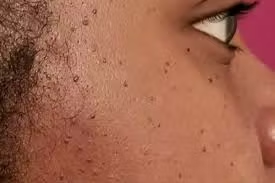
What is DPN?
Dermatosis Papulosa Nigra, often abbreviated as DPN, is a common skin condition that primarily affects people with darker skin tones. DPN is characterized by small, dark, raised skin patches or papules that often appear on the face, especially around the eyes and cheeks, but they can also appear on the neck, chest and back. Can often be mistaken for warts, skin tags, blackheads, freckles, etc.
If you've seen a picture of American actor Morgan Freeman, you know what I'm talking about. However, the condition is more common in women than in men.
What causes DPN?
DPN is genetically determined and tends to run in families. Although there is no exact known cause of why DPN develops, it is believed to be related to an overgrowth of skin cells in the outer layer of the skin. It is important to note that DPN is completely harmless and is not associated with any health risks. However, it can be very cosmetically disturbing as they can grow in size and number.
What does DPN look like?
DPN spots are small, usually between 1 and 5 millimeters in diameter, and are dark brown to black in color. They are smooth or slightly raised and can range in number from a few to hundreds. They can sometimes be confused with other skin lesions, such as liver spots or warts, but they are their own, distinct type of skin lesion.
Who is affected by DPN?
DPN is most common in people with darker skin types, especially those of African, Asian, and African-American descent. It is also more common in women than men and tends to become more prominent with age.
Treatment options for DPN
As DPN is a benign skin condition, it does not require medical treatment. However, some individuals may choose to have them removed for cosmetic reasons, particularly if they feel that the spots are affecting their self-esteem or aesthetic appearance.
The most common treatment options include:
1. Cryotherapy: Use of liquid nitrogen to freeze away the spots.
2. Laser treatment: A laser is used to remove the spots in a controlled and precise manner.
3. Electrosurgery The spots are burned away using electric current.
4. Curettage: Scraping off the spots with a surgical instrument.
All of these methods should be performed by a qualified dermatologist/physician, especially as there is a risk of hyperpigmentation or scarring, especially in people with darker skin tones. A thorough medical history must be taken and it is advisable to test on a small area first.
After treatment, it is important to follow the dermatologist's aftercare advice to minimize the risk of scarring and pigment changes (which are higher for "skin of color").
Summary:
DPN is a common, benign skin lesion that is especially common in people with darker skin tones. Although it does not require medical treatment, there are several effective methods to remove the spots if they are found to be bothersome. If you are considering removing your DPN spots, it is always best to consult a dermatologist who is experienced in treating skin of color to ensure the best possible results.
If you have any questions or concerns about DPN, please don't hesitate to contact us at Care of Skin. We are here to help you understand your options and provide you with the best possible care.