
 Svenska
Cart
Your cart is empty, but doesn't have to be..
Your cart is empty, but doesn't have to be..
Care Of Skin |25/10, 2025
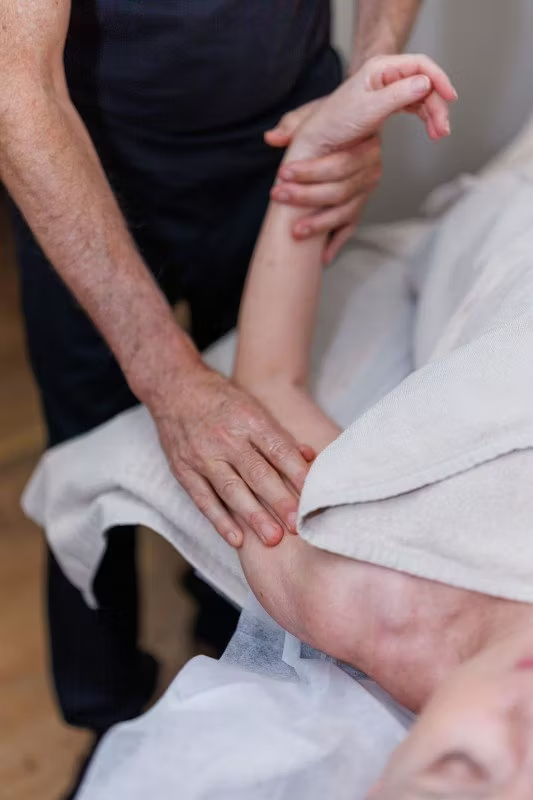
In an era where pace, performance and constant connectivity have become commonplace, we easily forget the opposite – relaxation. We often talk about being “connected”: engaged, productive and efficient. But just as important as being connected is actually the art of relaxing. Without it, we risk losing both balance, energy and joy.
Brain recovery
When we are active – thinking, planning, communicating – the brain is working at full speed. It processes impressions and handles information in an endless stream. In order to continue functioning, the brain needs rest. In stillness and silence, it gets a chance to sort, process and restore focus. That is why breaks often lead to clearer thoughts and better decisions.
Body balance
During activity, the body releases stress hormones that help us perform. But when these levels are never allowed to drop, the body remains in a constant state of alert. Relaxation helps the nervous system return to balance – the heart rate slows, breathing becomes deeper and the body can repair itself. It is during rest that we actually become stronger.
The source of creativity
Have you noticed that the best ideas often come when you're not trying? In the shower, on a walk, or in bed before you fall asleep? It's no coincidence. When we let go of achievement, the brain's creative network is activated. Relaxation makes room for new perspectives and solutions.
Skin and health
Stress not only affects the mind but also the skin. High levels of cortisol can disrupt the skin's protective barrier, increase inflammation and impair the healing process. Therefore, giving yourself time to rest, sleep and breathe is also a form of skin care - from the inside.
A balancing act
Relaxation is not about doing nothing, but about creating a balance between activity and recovery. It can be a quiet moment with a cup of tea, a walk in nature, a relaxing facial or just a few minutes of deep breathing. The important thing is to find your own little breaks in everyday life.
So the next time you think you should “do more” – stop for a moment. In rest, what actually happens is that gives you the strength to stay connected, when it’s really needed.