
 Svenska
Cart
Your cart is empty, but doesn't have to be..
Your cart is empty, but doesn't have to be..
Care Of Skin |2/08, 2026
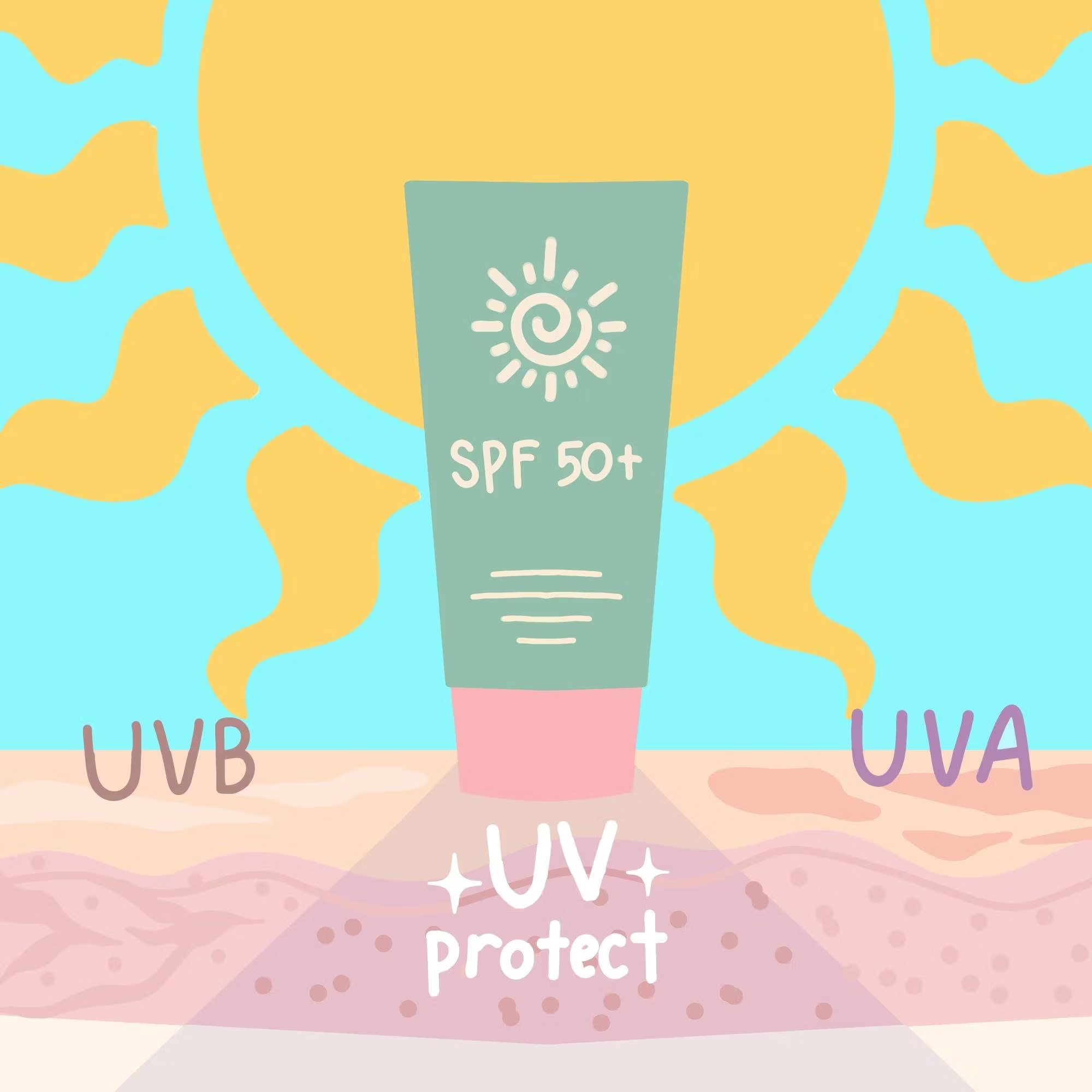
A tanned skin is often associated with vacation, warmth and health. But what actually happens to the skin when it gets tan?
The answer is that the skin is trying to protect itself.
When the skin is exposed to the sun's ultraviolet radiation (UV radiation), it affects the skin cells. The body responds by activating its natural defense mechanisms, in which melanin plays an important role.
Melanin is the pigment that gives skin, hair and eyes their color. It is produced in special cells called melanocytes and acts as a natural protection against UV radiation.
When the skin is exposed to the sun, melanocytes increase their production of melanin. The pigment helps absorb some of the UV radiation, thereby reducing the risk of DNA damage in skin cells.
It is this increased amount of melanin that causes the skin to turn brown.
Many people see a sunburn as a sign of health, but from a biological perspective, it is primarily a sign that the skin has been exposed to UV radiation and has activated its defenses.
A tanned skin provides some natural protection against continued UV exposure, but the protection is limited and can never replace sunscreen.
The sun's UV radiation consists primarily of UVA and UVB.
UVA rays
Penetrates deeper into the skin.
Contributes to skin aging by breaking down collagen and elastin.
May cause pigment changes.
Available year-round and passes through window glass.
UVB rays
Affects the outermost layer of the skin.
Is the main cause of skin burns.
Also stimulates the production of vitamin D.
Is strongest during spring and summer.
Both types of UV radiation can contribute to long-term skin damage if the skin is exposed to large amounts for a long time.
How easily we tan depends largely on our genes and how much melanin the skin naturally produces.
People with darker skin tones have more active melanin to begin with and therefore have better natural protection against UV radiation. This is also why dark skin often reacts differently to inflammation and is more prone to developing post-inflammatory hyperpigmentation (PIH).
Even dark skin can suffer from sun damage, pigment changes and skin cancer, which makes sun protection important regardless of skin type.
UV radiation doesn't just affect the pigment.
It can also:
break down collagen and elastin, which accelerates skin aging,
increase the risk of pigment spots,
make the skin drier by affecting the skin barrier,
contribute to inflammation and redness,
increase the risk of certain forms of skin cancer with repeated and high exposure.
You don't have to avoid the sun completely, but it's wise to take care of your skin.
Some simple advice:
Use a broad-spectrum sunscreen that protects against both UVA and UVB.
Apply sufficient sunscreen and reapply throughout the day, especially after swimming or heavy sweating.
Seek shade when the sun is at its strongest.
Complete with a hat, sunglasses and protective clothing for longer stays in the sun.
Moisturize your skin after a day outdoors to help the skin barrier recover.
Tanning is the body's way of trying to protect itself from UV radiation. Melanin acts as a natural defense, but it cannot provide complete protection against the harmful effects of the sun.
By combining good sun protection with smart sun habits, you can enjoy the summer while reducing the risk of premature skin aging, pigment changes and other sun-related skin damage.
Do you have questions about which sunscreen is right for your skin or how to best take care of your skin after summer? You are always welcome to contact us at Care of Skin – we are happy to help you.